
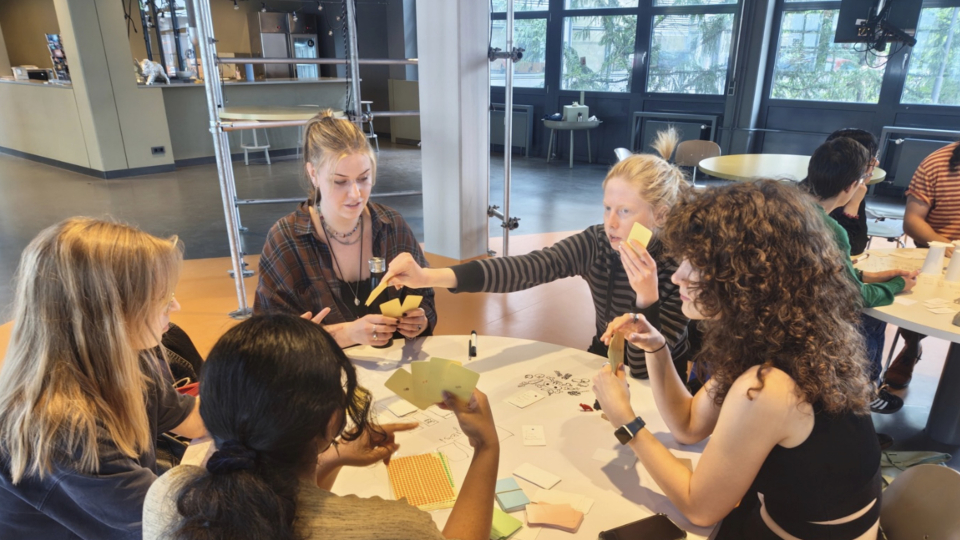
In the first week of May 2026, DE:HIVE ran a five-day hands-on game design workshop at HTW Berlin’s Culture and Design (CuDe) Week. Using the LUNA Framework, 12 students from other design programs were guided from two ideation sessions to a final playable prototype.
This workshop introduced a deliberate twist: the Frame cards were removed entirely, instead we tested the new Structures cards by integrating them into the ideation process for the board game ideas.
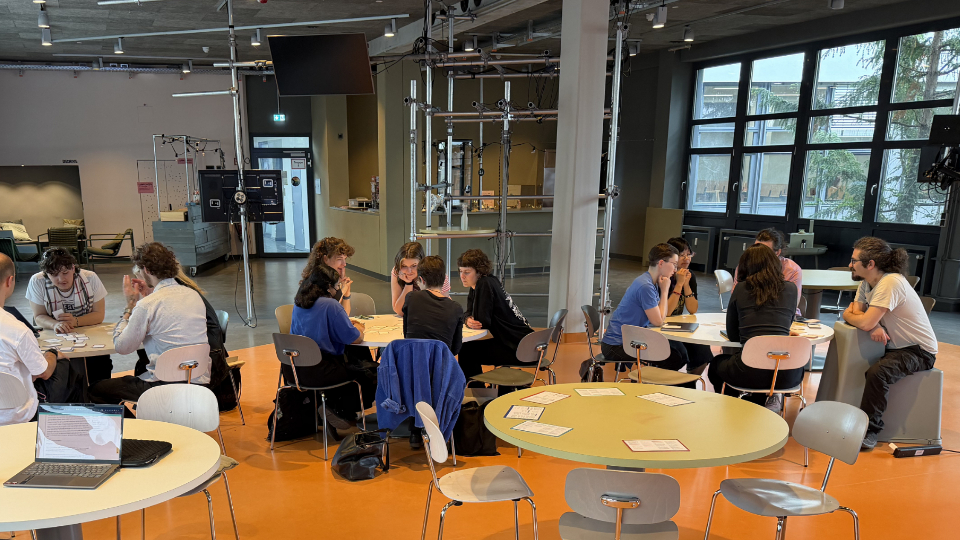
The result was a pleasant surprise: every team independently developed a thematic frame for their game. Even more striking, each chosen frame could have been matched to an existing LUNA card, the teams just got there without prompting. And the use of the Structures stack, helped the non-game-designers to transition really quickly into the projection of a playable game loop. Students received a theoretical introduction to LUNA, ran two full ideation rounds in rotating team constellations, and collected all concepts on a shared digital whiteboard: the “Market of Ideas.” Three ideas were chosen, three teams of four were formed, and the physical prototyping phase began. Each team had a raw, playable prototype by end of day. A session on rulebook structure and language was followed by read-aloud playtests with tutors, surfacing unclear rules and prompting targeted revisions to each game’s core loop. Teams finalised rules, balance, and visual design. Blind playtests validated that the games could be understood and played without tutor guidance. The final morning was spent printing and assembling. All three games were played in the afternoon, including by two school interns who provided unbiased, fresh-eyes feedback.
Students described LUNA as a pragmatic and intuitive tool for ideation, particularly useful for finding common ground within a team. The dynamic prototyping and playtesting phases were highlighted as the most engaging parts of the week. The main structural criticism: two full ideation rounds felt long relative to the total time available for prototyping.
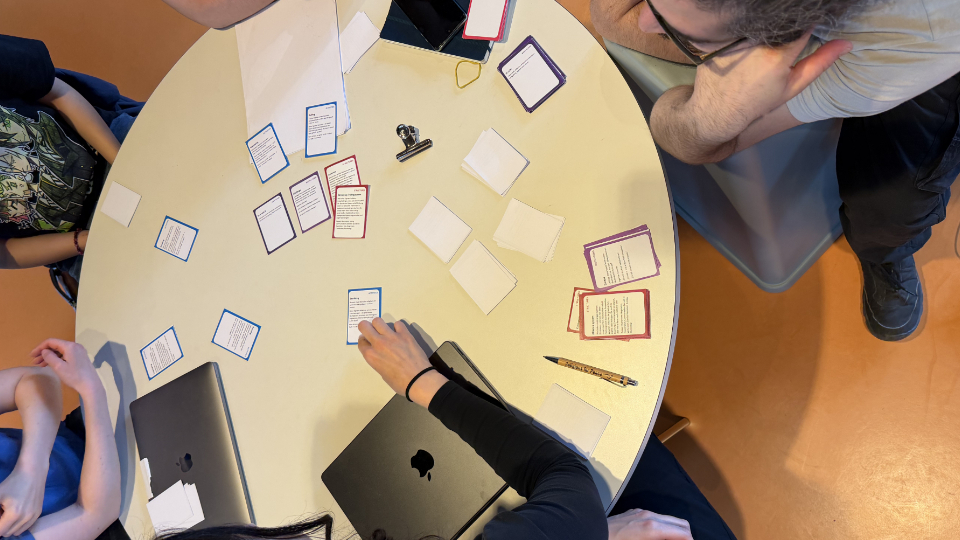
Attendance settled at 10 students by the final day, a pattern we link partly to the absence of academic credit for participation. Yet the students staying showed exceptionally high commitment. The mixed-discipline cohort – industrial designers, graphic designers, museologists, archeologists etc. – meaningfully enriched the quality of the final prototypes, and underlined the value of bringing different backgrounds together around a shared creative challenge. The LUNA workshop offered at CuDe Week received largely very positive feedback, with students calling for the CuDe Week to become an annual fixture.