
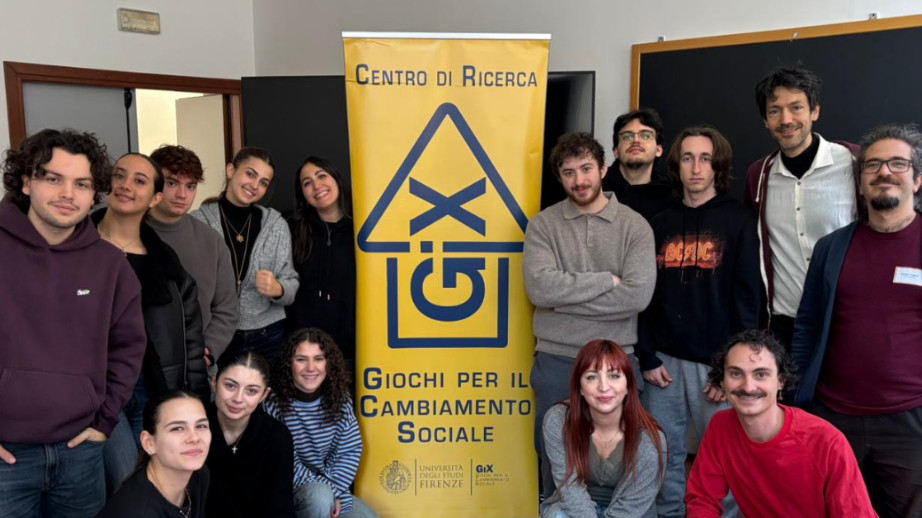
In March 2026, the University of Florence (UniFi), under the supervision of Professor Leonardo Boncinelli, organized a five-session educational module focused on game design as a learning methodology. The module required participating students to develop a playable analogue game prototype for at least four players, addressing a specific design challenge centred on the management of common goods and common-pool resource dilemmas.
The selected desiderata was particularly relevant to the participants’ academic background, as all students were enrolled in programmes offered by the Department of Political Economy. The activity was therefore designed to establish a direct connection between theoretical concepts explored within the social sciences and their practical application through game design.
The workshop introduced games as tools for modelling, analysing, and communicating policy challenges as well as economic, institutional, and social dynamics. Through a learning-by-game-design approach, a variation of project-based learning, students were guided in translating key concepts from the social sciences, including actors, incentives, rules, constraints, imperfect information, conflict, and cooperation, into game mechanics capable of representing trade-offs and the intended or unintended consequences of collective decision-making.
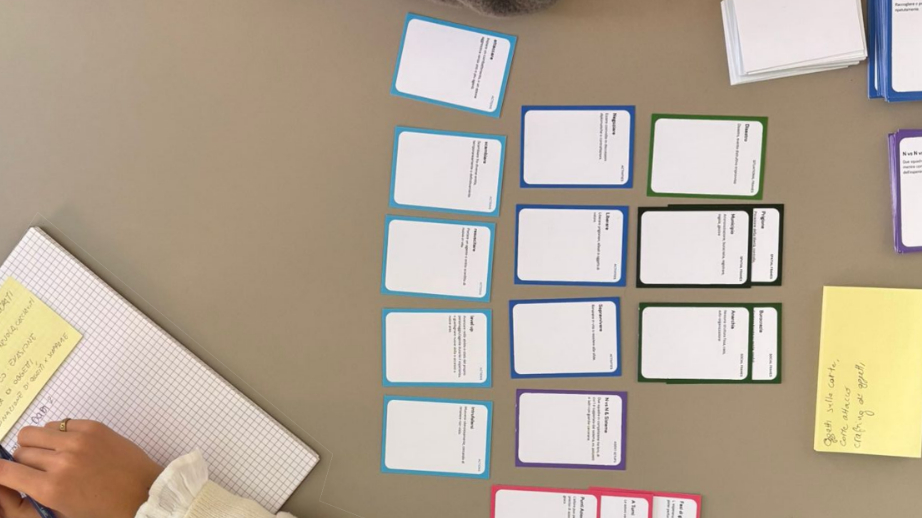
Within the workshop, the LuNa Framework was employed exclusively during the ideation phase. The activities also provided an opportunity to test an updated version of the framework featuring additional categories and the newly introduced Mechanisms Sheet. Consistent with previous workshop experiences, the Market of Ideas activity enabled participants to generate multiple concepts collaboratively and subsequently select the ideas to be developed further.
Working under the guidance of tutors, participants completed the ideation process as planned. During the initial session, six distinct game concepts were generated. Students then formed development teams around the selected concepts and spent the following four sessions refining and prototyping their projects.