
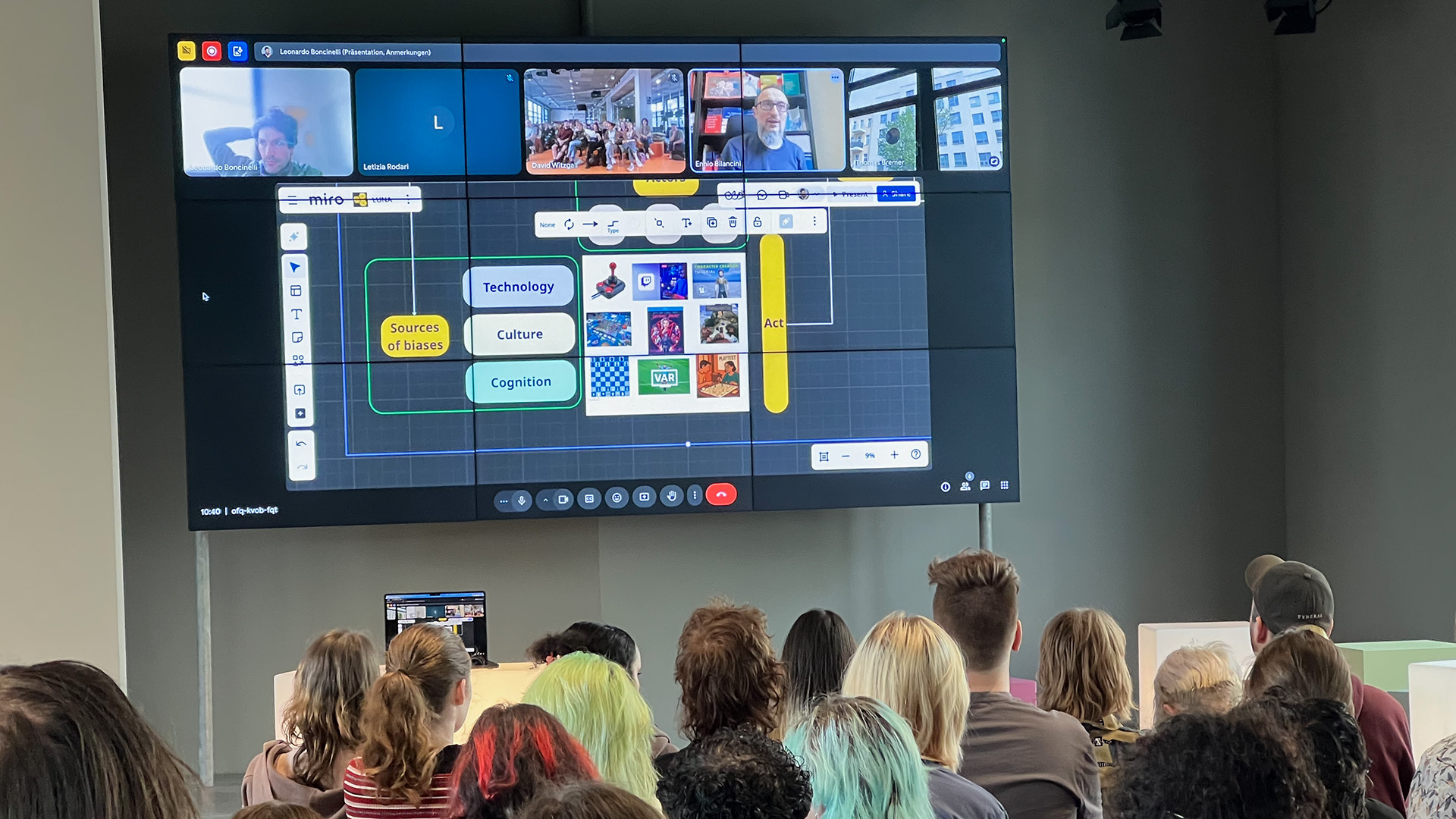
On 23 April 2025, DE:HIVE hosted the conclusion of the workshop series on ‘Identifying Prejudices in Game Rules and Algorithms’ launched at PLAY 2025 in Bologna in a hybrid format. The innovative, two-part workshop, organised by HTW Berlin (HTWB), brought together researchers and students to open a discourse on bias in games and generative AI.
The workshop series began during the PLAY – Festival del Gioco in Bologna from 4 to 6 April and concluded on 23 April at DE:HIVE in Berlin as a hybrid event. The partners from UniFi, IMT Lucca and HTW Berlin created a rich, multicultural dialogue on identifying bias in game systems.
Surrounded by hundreds of games and passionate players, our academic discussions gained a tangible, real-world context that cannot be replicated in a traditional conference room.
The Italian part focused on presenting theoretical frameworks and exchanging methods from different academic traditions.
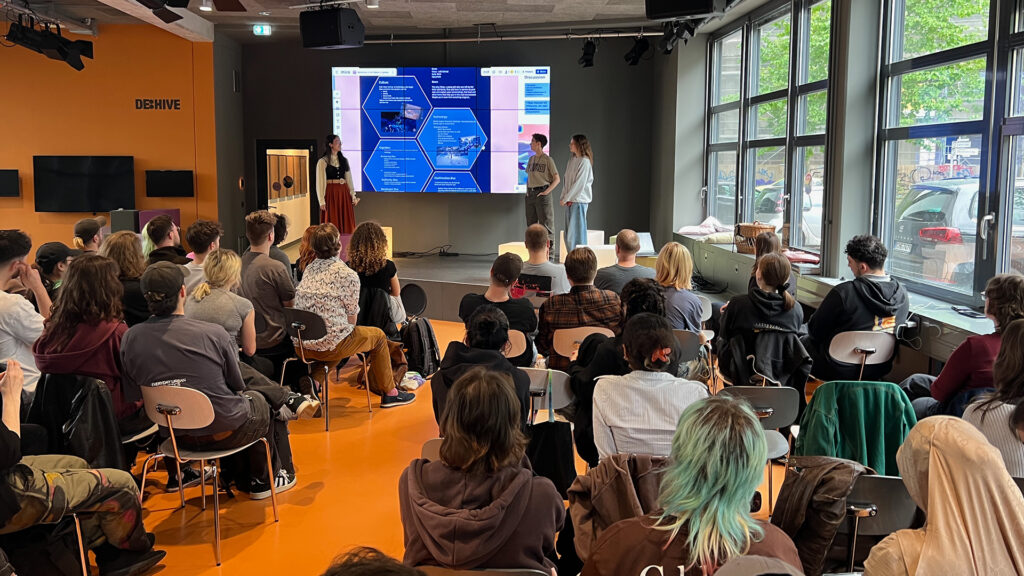
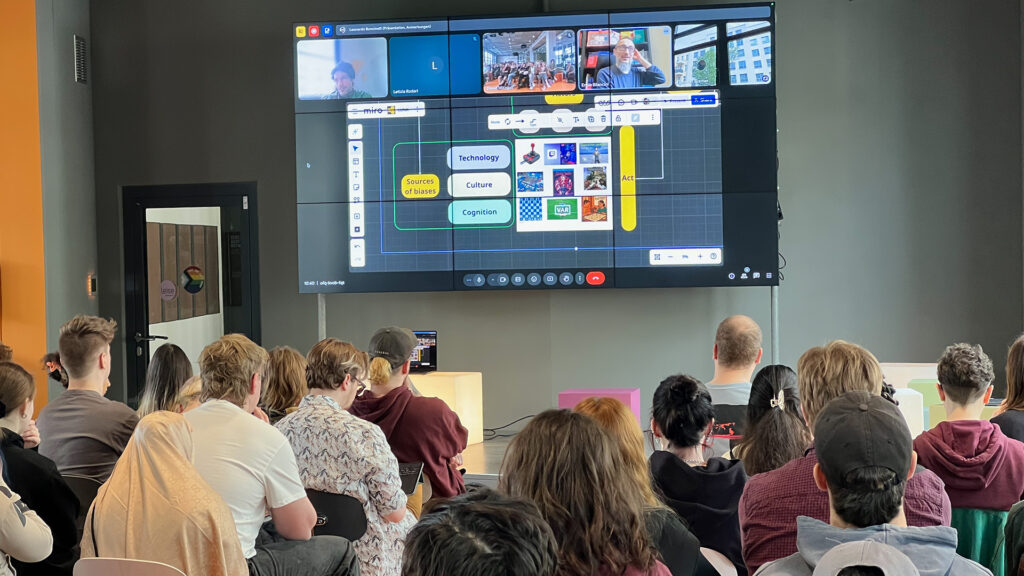
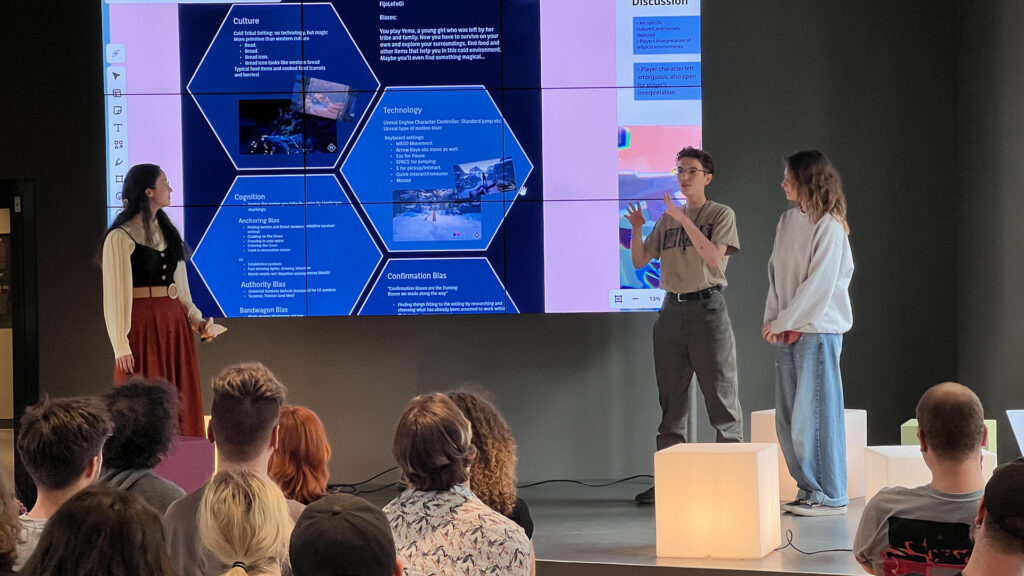
Three weeks later, on 23 April, the workshop took place at DE:HIVE at HTW Berlin, where students also participated in the discourse. The results of the workshop will also be incorporated into the Game Jam taking place next weekend.
This discussion explored how algorithmic systems often reinforce existing social prejudices, but also offer unique opportunities to correct them.
Another discussion addressed culturally influenced prejudices. What seemed neutral to developers from one cultural context often had great significance in another.
The workshop series shows how international academic collaboration can address real-world challenges while educating the next generation of conscious creatives. By combining the cultural richness of the gaming festival in Bologna with the innovation ecosystem of DE:HIVE in Berlin, the project offered participants a unique learning experience that neither city could have provided on its own.
The success of this workshop series underscores the importance of international collaboration in addressing global challenges in digital culture. Given the continued growth and influence of the gaming industry on society, such joint efforts will become increasingly important to ensure that our digital experiences reflect our shared values.