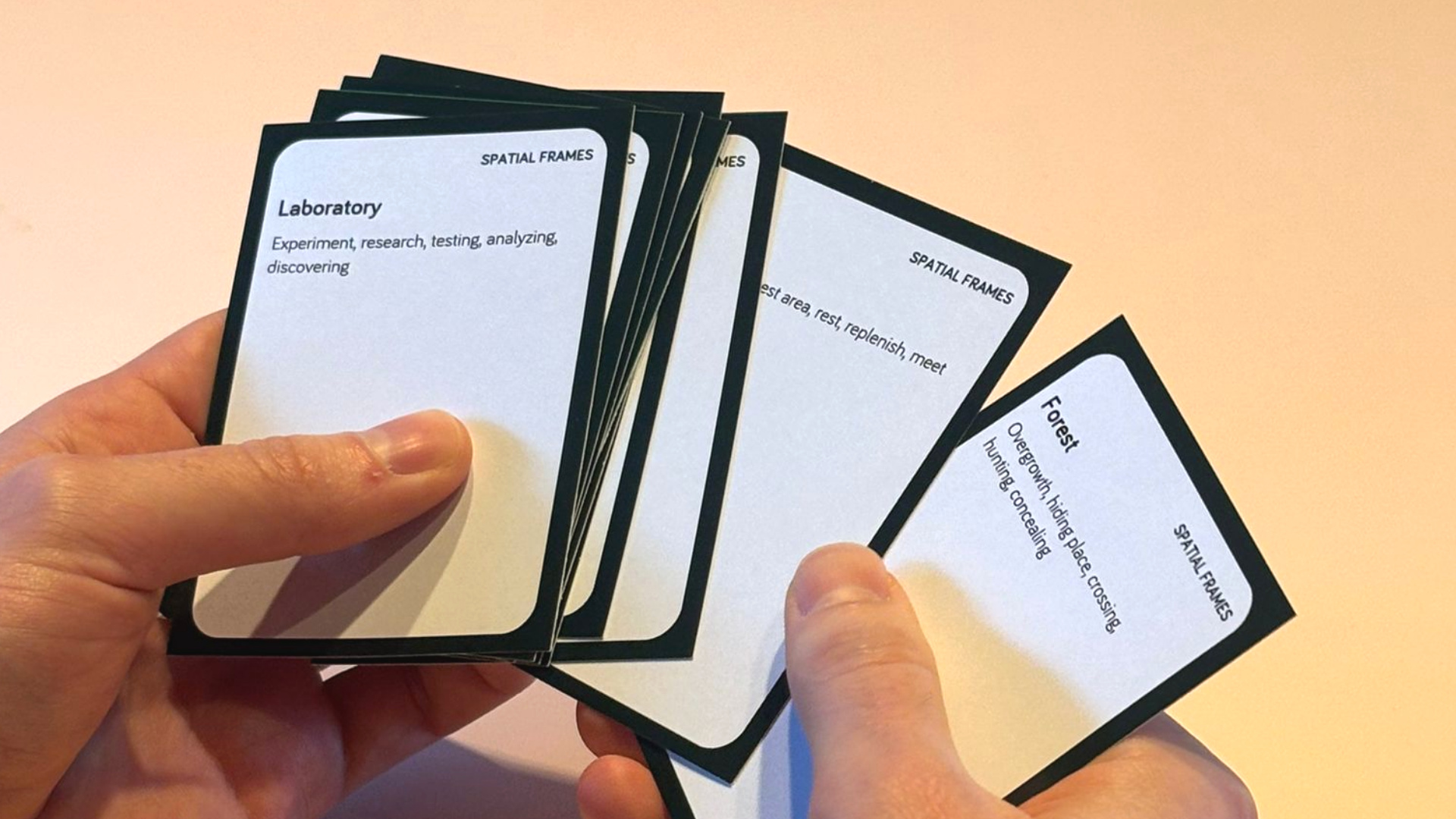
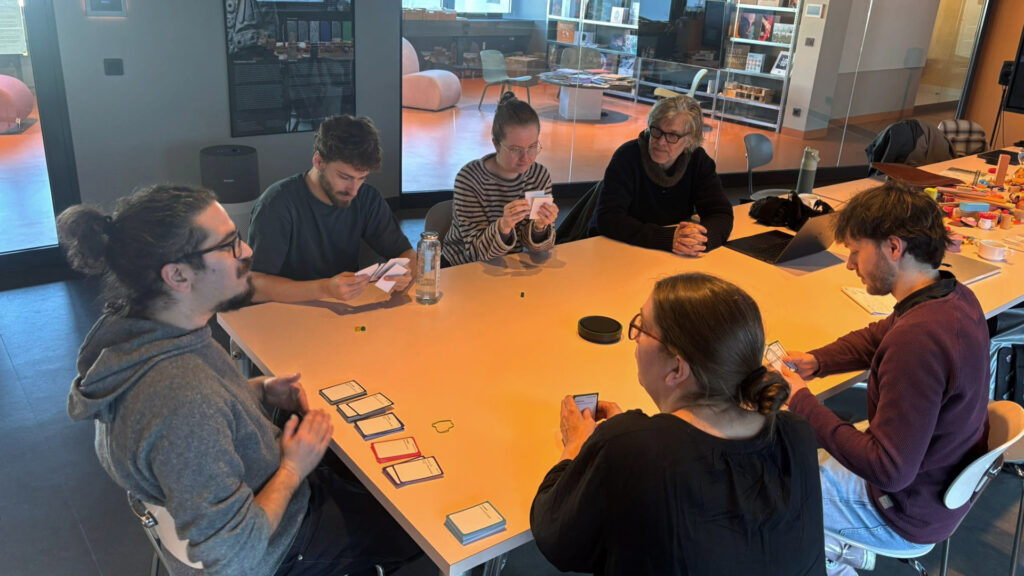
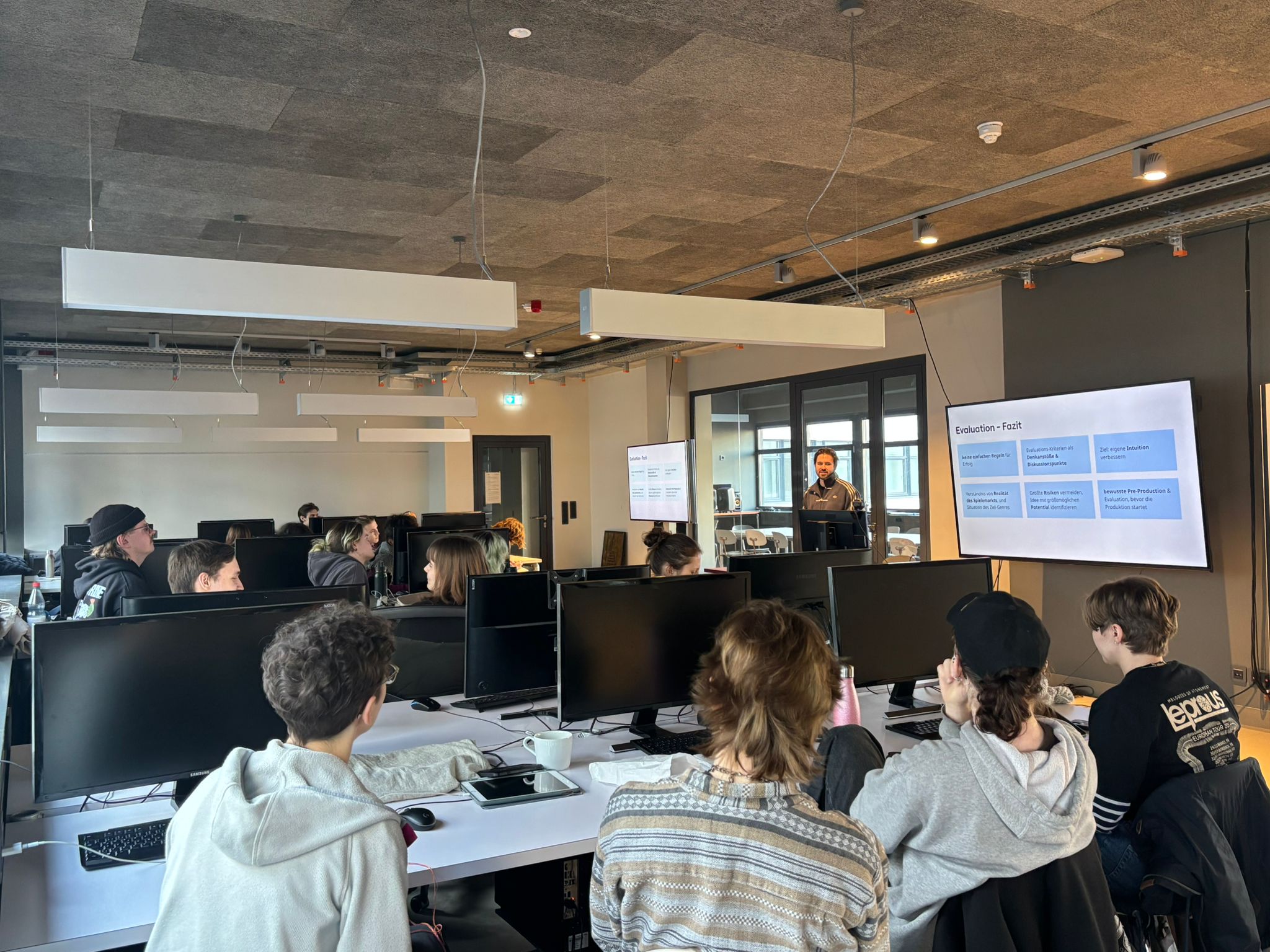
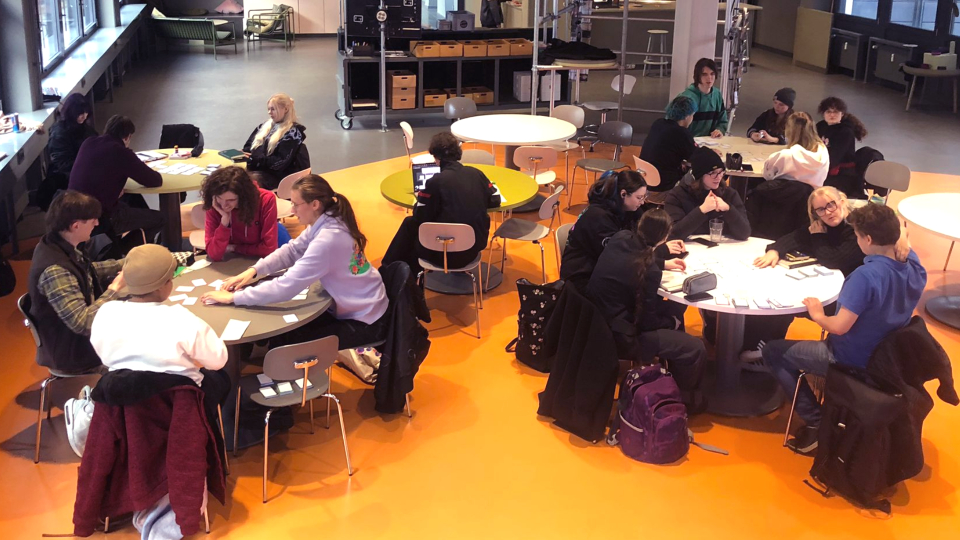
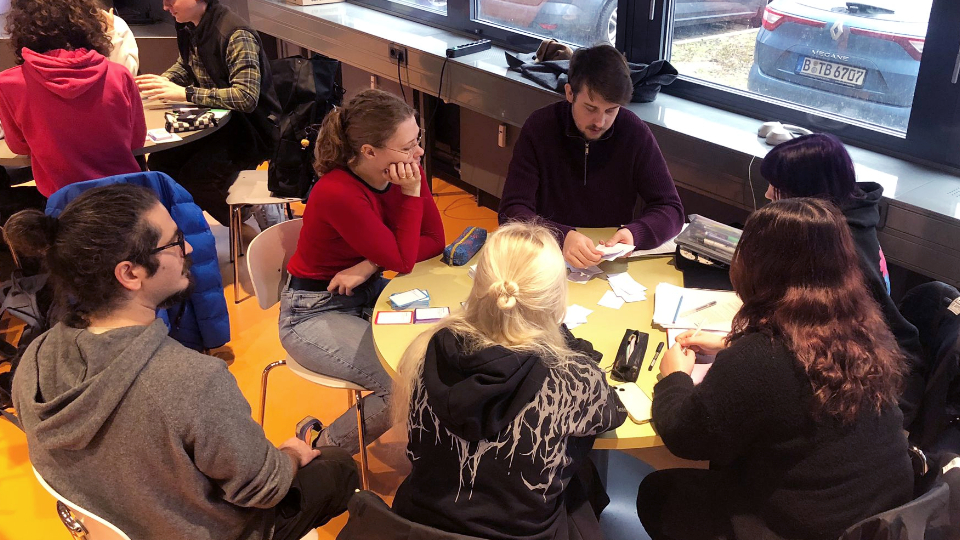
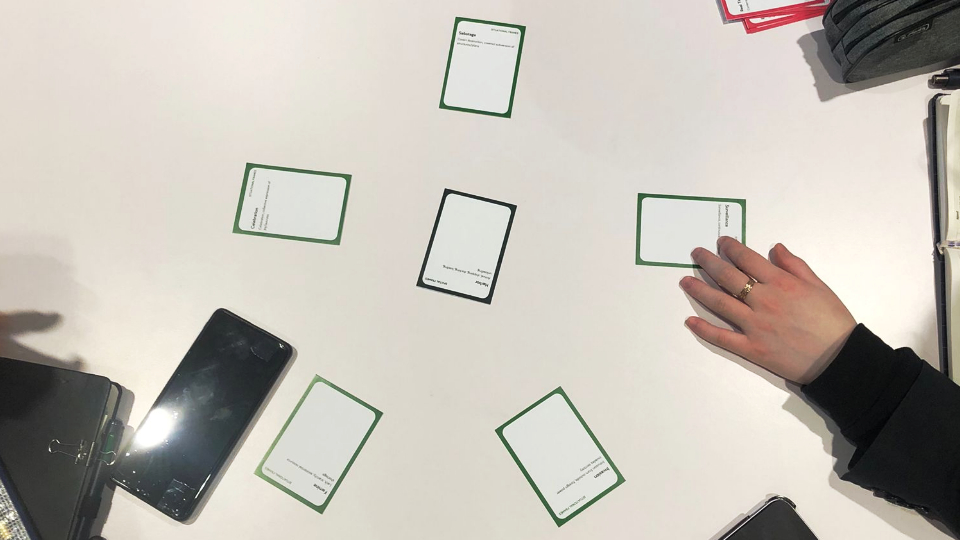
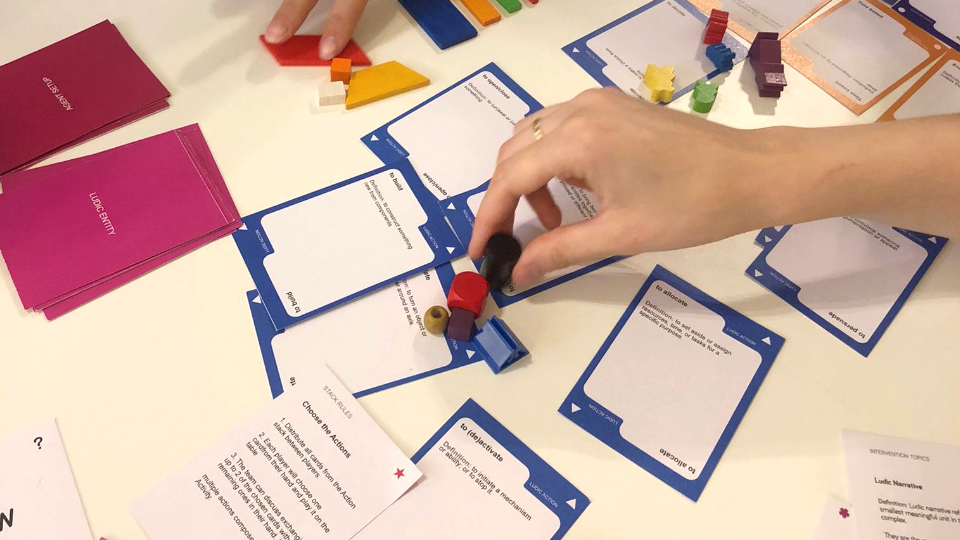
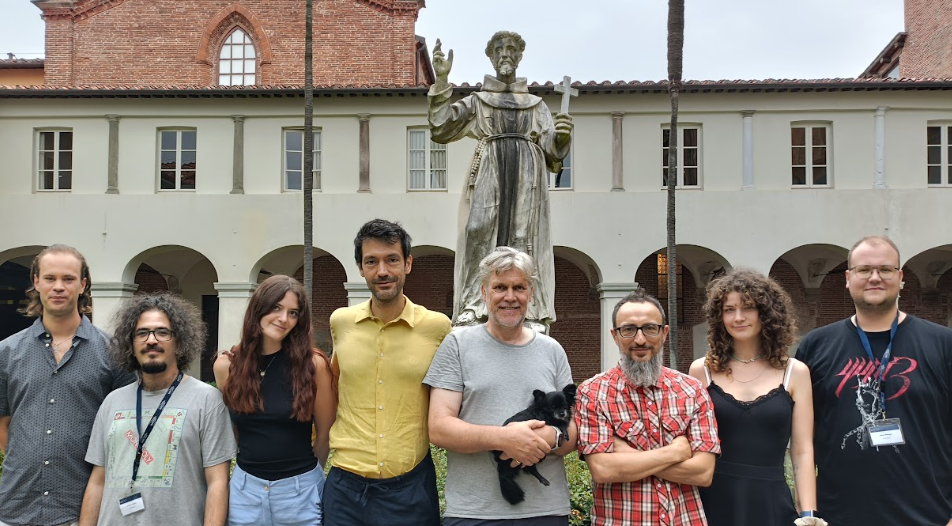
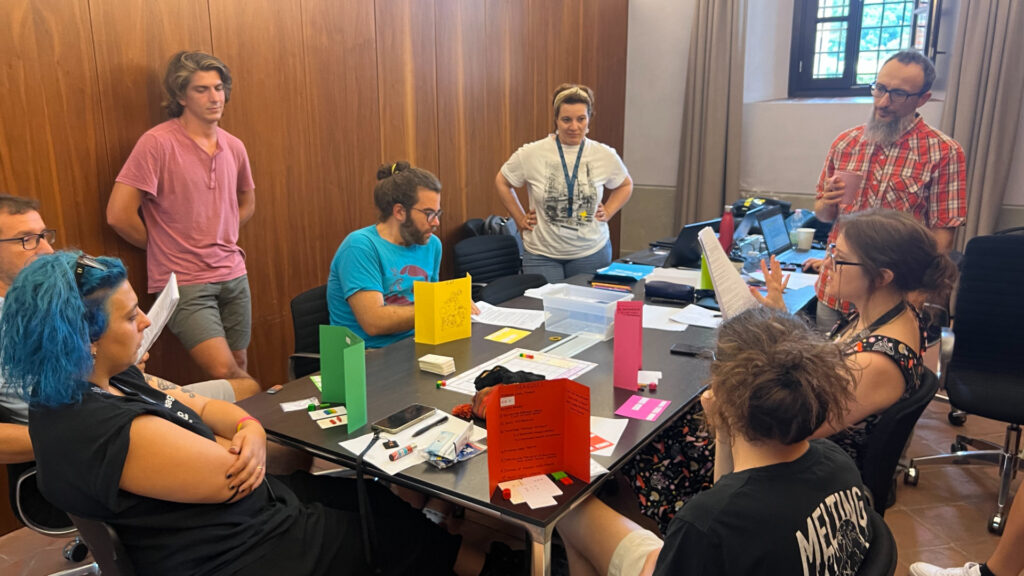
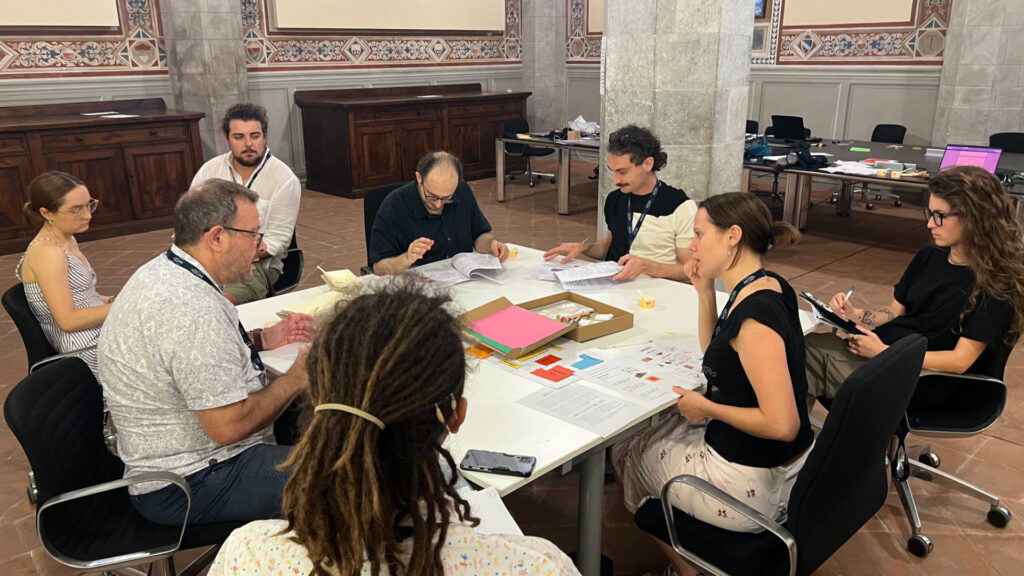
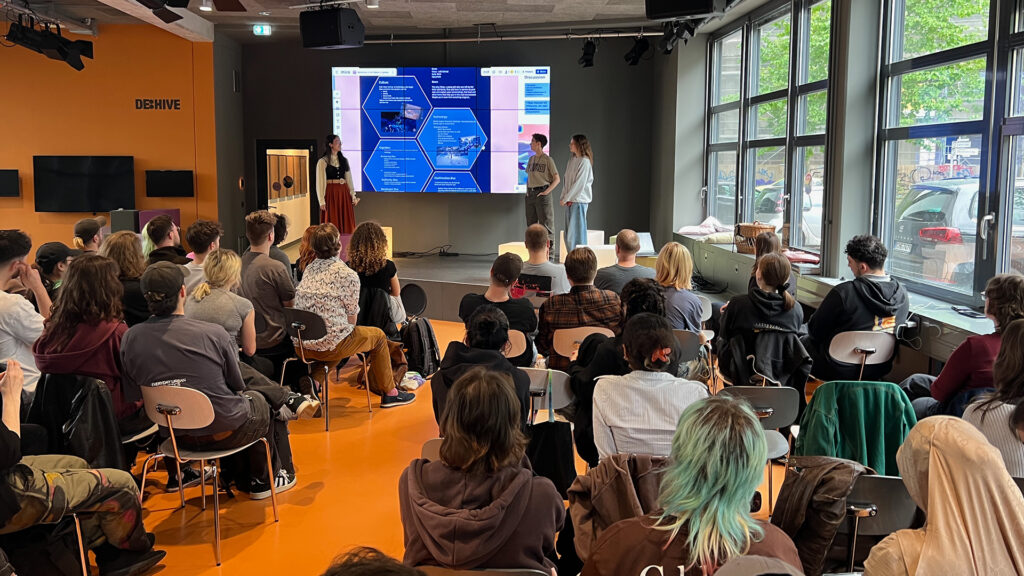
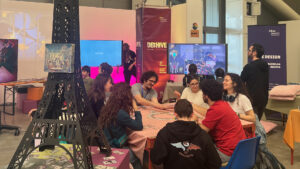
or a focused playtesting and ideation session, we met with Simone Kühn from the Max Planck Institute for Human Development to explore how the LUNA Framework can support the development of meaningful game concepts. The shared goal of the session was clear: to design a game concept that motivates younger people to spend more time outdoors and reconnect with nature.
The ideation process began with the Frame cards, which served as a common starting point for discussion and exploration. From there, the session quickly opened up into a rich landscape of ideas. Participants experimented with different approaches, testing how playful structures could encourage real-world behavior beyond the screen.
Among the concepts explored was a game idea that invites players to collect litter in natural environments, scan their findings, and receive AI-generated “trash monsters” in return — echoing familiar collection mechanics while reframing environmental action as playful discovery. Another concept envisioned an escape-room-like experience in nature, where players must explore and navigate real locations to solve challenges and progress through the game.
The ideation ultimately converged on a particularly engaging concept: a hybrid of Werewolf and geocaching. In this setup, participants follow a shared route through natural spaces while simultaneously deducing which player among them is the imposter. The combination of physical movement, social interaction, and deduction created a compelling framework for outdoor play.
Overall, the session demonstrated how the LUNA Framework can generate a wide range of promising design directions within a short time. Rather than producing a single finished concept, the ideation phase surfaced multiple strong approaches — each offering potential for deeper exploration and further development beyond the workshop setting.
In a dedicated game mechanics session, the LUNA Framework became both a shared language and a practical tool for exploring how games work beneath the surface. Through discussion, analysis, and hands-on ideation, participants engaged deeply with the core elements of the framework and applied them directly to existing games and new design concepts.
The session began with a collective exploration of the LUNA vocabulary. Frames, Entities, Ludic Agents, Human Agent Motivations, Activities and Actions, Process Segmentation, Human Agent Situations, and Agent Setups were examined not as abstract theory, but as living components of playable systems. Existing games were discussed and dissected using this terminology, allowing participants to articulate design decisions with greater precision and clarity.
Frames served as an early focal point. Participants identified the underlying frames of well-known games, developed new game ideas starting from a single frame, and experimented by applying alternative frames to existing concepts. These exercises revealed how profoundly a change in framing can reshape player experience and systemic behavior.
From there, attention shifted to Entities, Actions, and Activities. By distinguishing between player actions and broader activity loops, participants broke down existing games into their functional components. Entities were defined and contextualized, and complete game systems were explained through the relationships between these elements.
Motivation and agency followed. Using Ludic Agent and Human Agent Motivation cards as starting points, participants developed game concepts driven not by mechanics alone, but by player intent and desire. This perspective encouraged designs that foreground meaningful engagement over conventional genre expectations.
Process Segmentation introduced a temporal dimension to the analysis. Participants explored what process segmentation means in practice, analyzed different combinations, and developed game concepts based on segmented player journeys. This approach highlighted how pacing, progression, and structure can fundamentally shape a game’s experience.
The session also ventured beyond commercial conventions. By starting from Human Agent Situations, participants designed game concepts rooted in specific human contexts rather than market-driven formulas. Finally, existing games were categorized through Agent Setups, offering a clear overview of interaction structures and player relationships.
Across all exercises, the LUNA Framework functioned as both guide and catalyst. It enabled structured analysis while leaving room for creative exploration, demonstrating once again how playful methodology and clear conceptual tools can deepen understanding and expand the possibilities of game design.
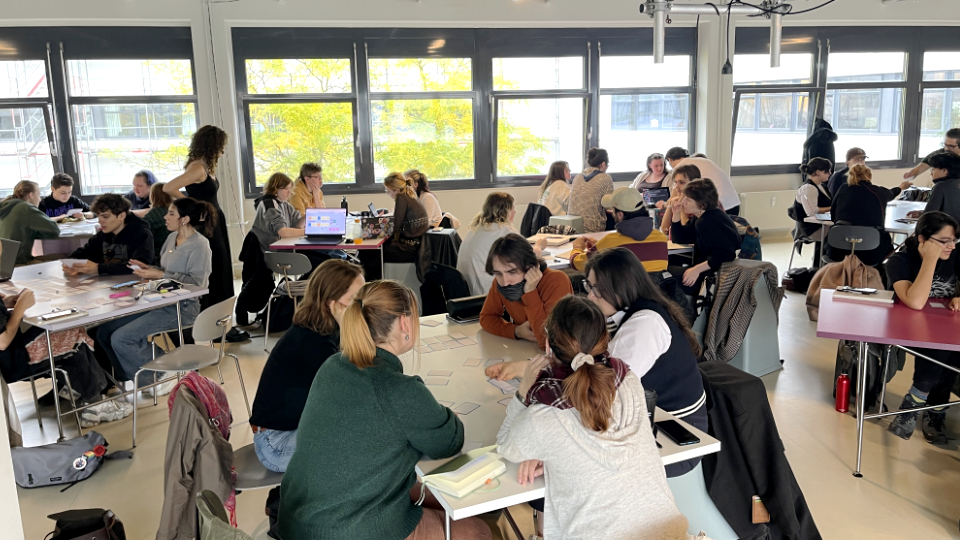
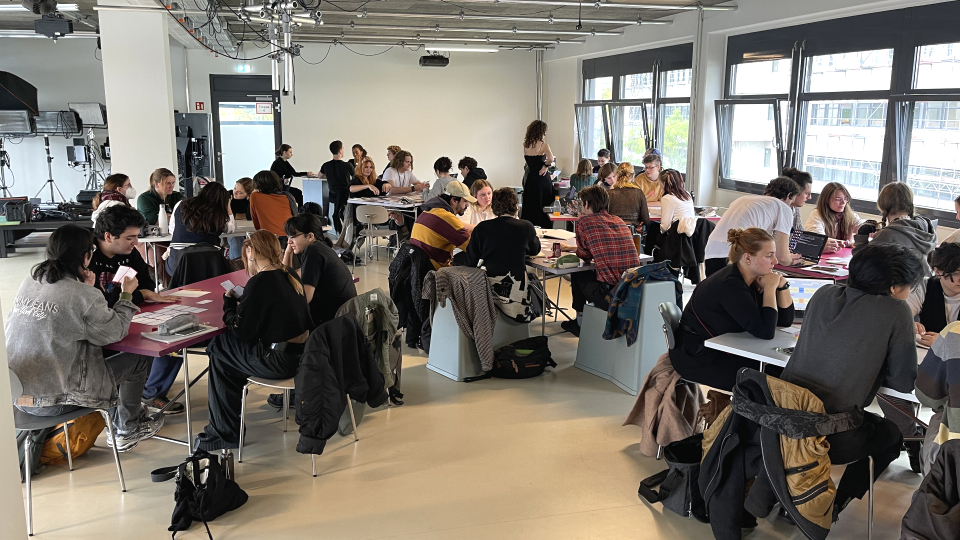
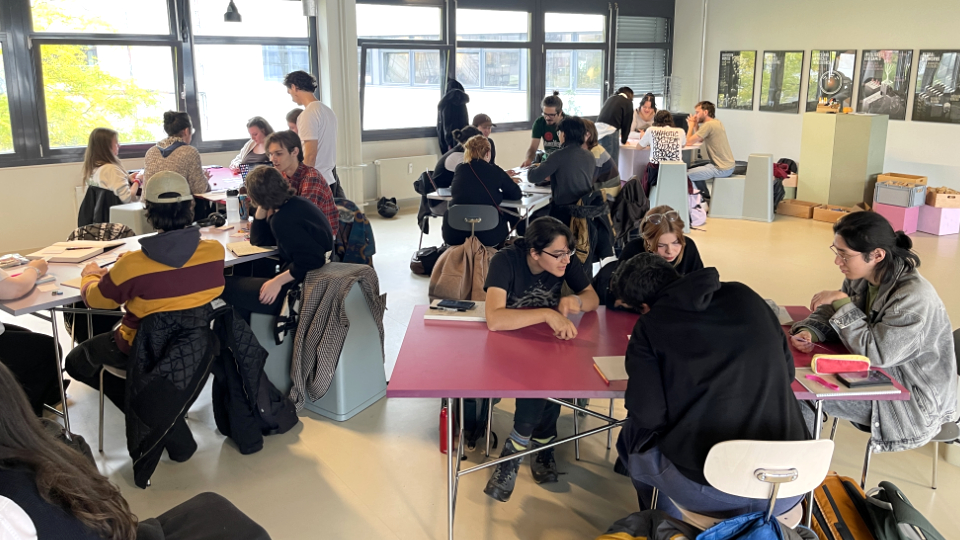
The rooms were buzzing once again, cards shuffled, pens ready, and minds fully engaged: the latest LUNA-Framework playtest with DE:HIVE students has come to an end. Over two intensive days, participants stepped into the framework to explore how social frames, mechanics, and decision-making intertwine in playful design practice.
What quickly became apparent was how differently teams approached the process. While the LUNA Framework encourages starting from Social Frames, some groups instinctively gravitated toward mechanics first – a reflection of prior learning habits and established design routines. This tension sparked meaningful discussions and revealed how deeply ingrained design pathways can shape creative thinking.
As the sessions unfolded, unique group dynamics emerged. Teams varied widely in their speed and confidence when making decisions. Many employed a process of elimination, carefully narrowing down options before opening the floor for discussion. When consensus proved difficult, some groups even turned to good old-fashioned pen voting – a surprisingly effective democratic tool in moments of creative deadlock.
Day two brought an important insight: smaller teams thrived. Groups of two and three participants proved especially agile, navigating the framework with greater focus and efficiency. To keep momentum high, some teams introduced self-imposed timers, transforming decision-making into a playful challenge of its own.
Beyond testing mechanics, the playtest offered valuable insights into how participants perceive Social Frames – often as agent-based setups such as rivalries or partnerships. This feedback now feeds directly into the ongoing development of the LUNA-Framework, helping refine its structure and accessibility.
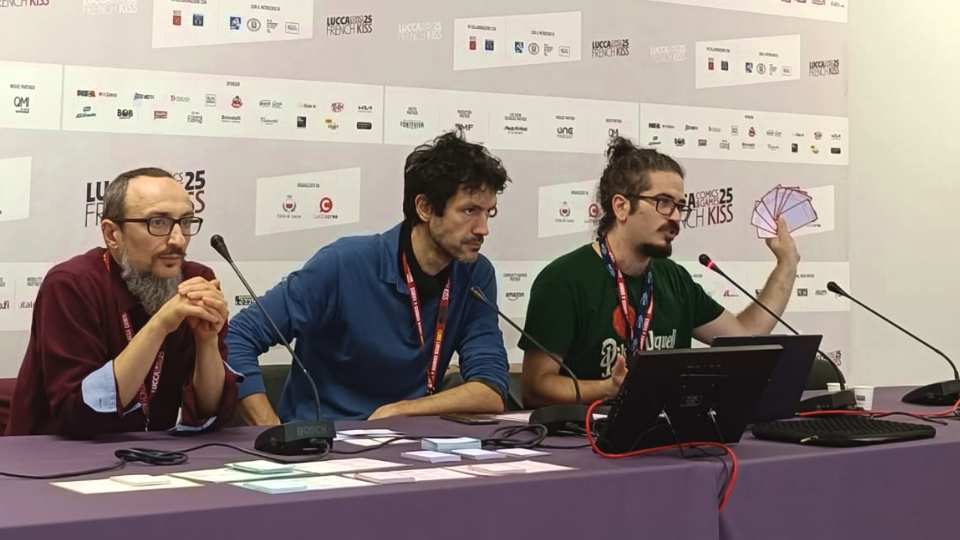
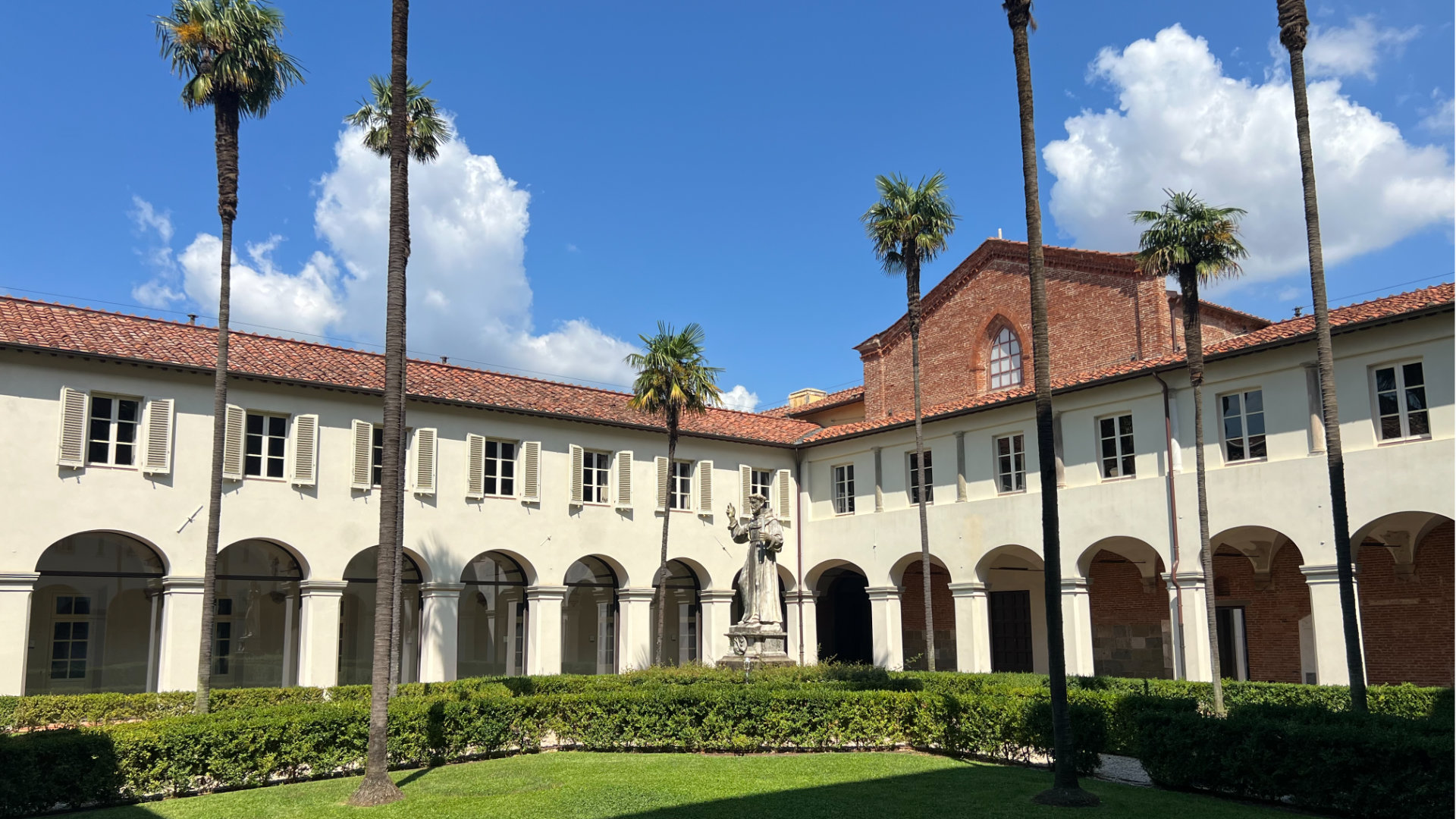
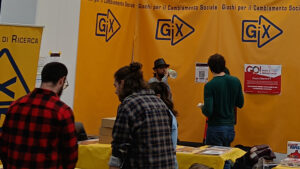
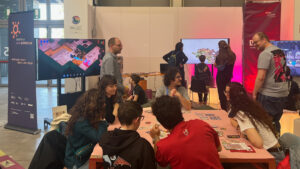
At Lucca Comics & Games in Italy, the LUNA – Framework was put to the test in a vibrant exhibition setting – and the results were both encouraging and inspiring. Even participants with no prior experience in game system design or game development were able to generate their own game concepts within just one to two hours, demonstrating the framework’s accessibility and ease of use.
The structured card system played a central role throughout the sessions. By offering targeted prompts and guiding questions, the LUNA-Framework helped participants navigate complex design processes step by step. This structure highlighted key aspects of their emerging concepts and supported a focused, methodical approach to building game systems.
Interest in the framework was remarkably high. Many participants expressed enthusiasm about using the LUNA cards directly in schools and educational environments, actively asking about the planned release date. This strong response reinforced the framework’s potential beyond professional design contexts, positioning it as a valuable educational tool.
Alongside the positive feedback, valuable insights for further refinement emerged. Some cards and card stacks – particularly those related to Ludemes – were perceived as difficult to understand. Additionally, certain stacks felt redundant once participants’ ideas had become more concrete. This sparked discussions about whether these elements should be introduced later in the process, adapted, or potentially removed altogether.
Despite these points for improvement, the overall response remained highly positive. The Lucca exhibition once again confirmed the LUNA-Framework’s ability to empower creativity, support structured thinking, and open game design to a broader audience – regardless of prior experience.
The LUNA-Framework playtest with DE:HIVE students offered a focused look into how guidance can actively support playful creativity. From the very start, participants engaged confidently with the LUNA-Framework, requiring only minimal guidance from the game master. The clear sequence of steps and card-based mechanics empowered groups to navigate the framework independently and with ease.
Beginning with the situation card proved to be a strong entry point. It helped participants anchor their ideas early on, sparking more focused and active engagement. The four-card limit functioned effectively, encouraging deliberate choices rather than overwhelming possibilities. Even in moments when facilitation was not immediately present, groups intuitively self-regulated, respecting the restriction and maintaining the flow of play.
Feedback throughout the session was overwhelmingly positive. Students highlighted how the defined structure supported creativity rather than limiting it. “Having defined steps makes idea generation much easier,” one participant shared, while another reflected, “I feel much freer during ideation.”
At the same time, valuable points for improvement emerged. Some participants noted that the font size on the cards was too small, and certain card names did not accurately reflect their descriptions. The mechanics deck, in particular, sparked mixed reactions, with some dissatisfaction around specific card contents and noticeable duplication.
Overall, the playtest demonstrated the strength of the LUNA-Framework in supporting autonomous, playful design while offering clear insights for refinement. Each observation feeds into the ongoing development of the system.
The dust has settled, the dice have been rolled one last time, and the Summer School for Game Design is over. What started as an outrageous ‘play the game design’ experiment concluded with outrageous success: 18 innovative game concepts conceived, carried through a ‘Market of Ideas,’ and birthed into 6 fully playable prototypes intending to ‘shake’ society.
Instead of following the traditional linear game development approach, the participants were asked to collaborate and play design as a sort of game-like activity. It transforms the usually tedious job of ideating and prototyping into an intrinsically enjoyable and shareable experience.
It proved not just teaching innovation but much more-an access to creative potential. ‘Design decisions as gameplay: rules, challenges, and rewards’ meant that the participants would start to experiment, iterate, and push boundaries in a natural way that conventional design workshops rarely achieve.
An initial alpha version of the LUNA Framework has impressively shown its promise, and this summer school was the perfect occasion to test-drive its first alpha. Over eight intensive days, participants got to experience in vivo how the LUNA (Ludo-narrative) Framework makes the transition between playful mechanics and substantive impact.
While the structured approach of the framework had given the participants the required theoretical basis, it was its merging with the methodology of ‘play the game design’ that brought it to vivacity. Prof. E. Bilancini, L. Boncinelli, and T. Bremer introduced the LUNA concepts on Friday, August 22, in the morning, but by Friday afternoon the participants were deep into playful ideation activities – working individually and in groups – generating game concepts to address real challenges.
The spark developed into Saturday evening, wherein the room had energized people within it. There were eighteen ‘play the game design’-approach-sourced game ideas, and each of them was a result of that collective and fun-to-ideate process. All of these, separately, dealt with various aspects of societal betterment; be it the awareness of the environment, building up a community, economic discrepancies or civic engagement.
What could have functioned as a basic shortlisting exercise was spun into a vibrant, auction-type, and ingenious ‘Market of Ideas’ ride co-orchestrated by the faculty as the selection process tied to the fun and games theme of the entire program. Participants were pitching their concepts, forging alliances, and finally, roundabout six ideas that had garnered most promise for development were agreed upon. The democratic approach saw to it that selected concepts were of creative merit as well as real buy-in from development teams.
Prototyping Through Play
At Sunday’s open exploration day, newly formed teams could contribute much deeper to the selected concepts, soaking up inspiration and starting to flesh out the mechanical and narrative elements that would bring their games to life.
Monday through Wednesday is where the alpha of the fake LUNA Framework really came to shine in practice. Teams had applied its structured approach to transform abstract ideas into tangible prototypes; the methodology of “play the game design” had ensured that even the most challenging development decisions always stayed engaging and collaborative. Emphasis on balance of ludic elements with narrative purpose, the scaffold participants needed to navigate such complex design challenges.
Daily feedback sessions with faculty kept the teams on track, and cross-group playtesting created a culture of sharing where ideas could be honed and refined through peer input. The “play the current state” iteration became this unbelievable accelerator for rapid prototyping and iteration.
Six Prototypes, Infinite Possibilities
Thursday’s final presentations showed the amazing change which had happened. There was emergence of six fully playable prototypes each representing hours of collaborative design work but never work that felt like it was all thanks to an approach that was playful in every aspect of the development process.
Playtesting sessions gave validation to the fact that the prototypes were not just sound on a conceptual level but were actually good to play. The games were not approached by participants, faculty members, and experts as exercises in academia but as full-fledged entertainment experiences that had the main agenda of delivering messages on social issues and advocacy of positive behaviors.
Beyond the Summer School
By Friday morning, when the participants were leaving, they were not taking just the memories of an intense week. They left with ‘playing the game design’ practical experience, a better understanding of how an alpha version of the LUNA Framework might steer meaningful game development, and, most critically, six working prototypes that could become the core of future development.
As the success of the summer school shows, this is a way that design “play the game design” combined with a structured methodology of the LUNA Framework can work. For example, the transformation of 18 initial ideas into six polished prototypes represents compelling evidence that just the alpha version has already impressively demonstrated its potential for revolutionizing game design education and practice.
The Game Continues
While the summer school has ended, the games and ideas created through this playful design process are barely beginning to take off. Each prototype embodies not just a successful application of the alpha version of the LUNA Framework but validation of the “play the game design” philosophy that rendered the entire experience productive and truly fun.
Participants realize game design does not need to be a struggle- it can be the design itself. Armed with the LUNA Framework and playing through design challenges, they bring about the next generation of game designers who know the best games come from designers who never stop playing- even with the design process itself.
The European Game Science Lab’s inaugural game jam proved to be a groundbreaking success, bringing together creativity and critical thinking across borders. Organized by Bug Gamelab with support from HTW Berlin’s DE:HIVE, this hybrid event connected over 100 participants—50+ students and staff from HTW Berlin and 50+ from Bahçeşehir University in Istanbul.
Focus on Biases in Gaming
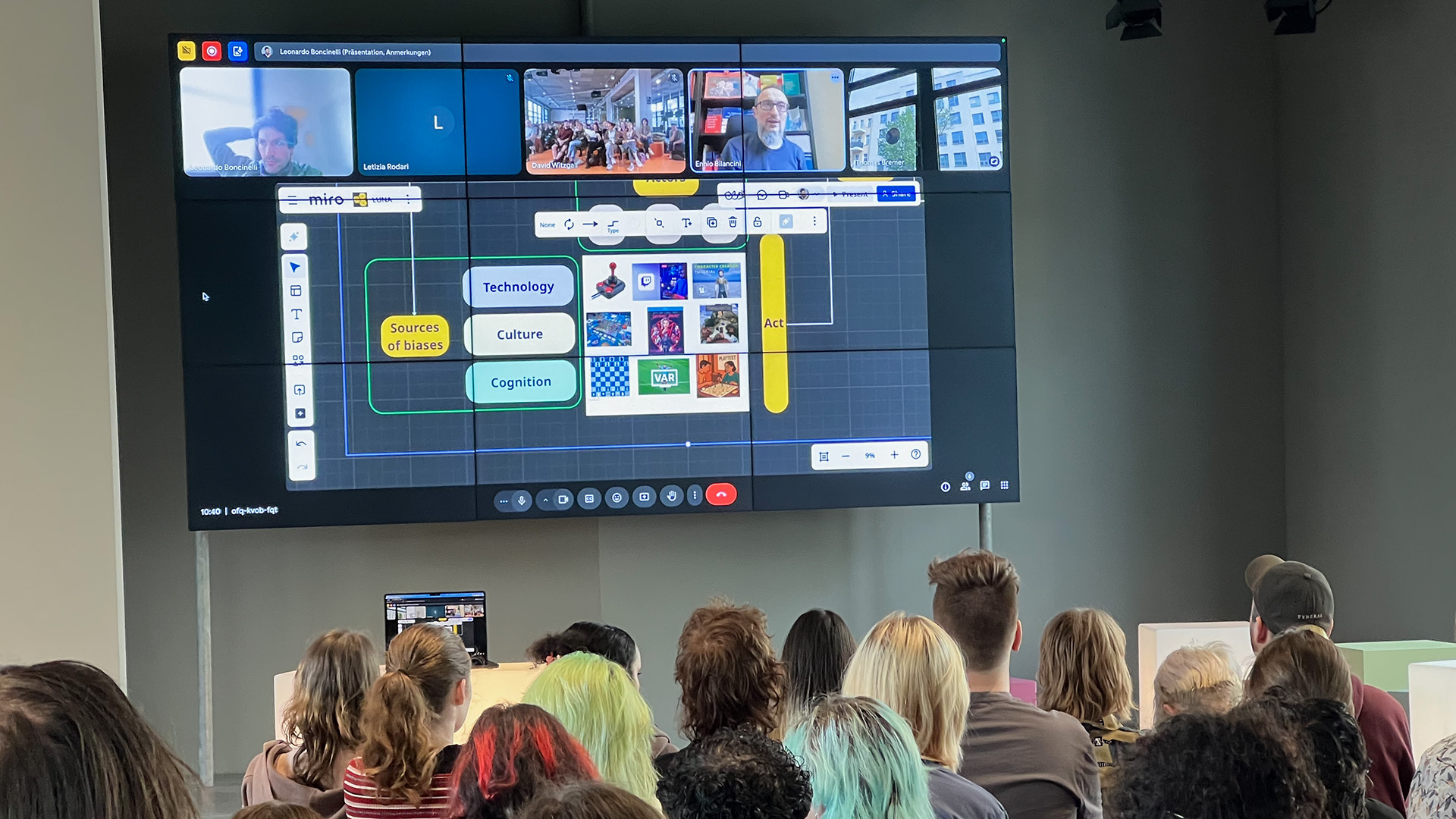
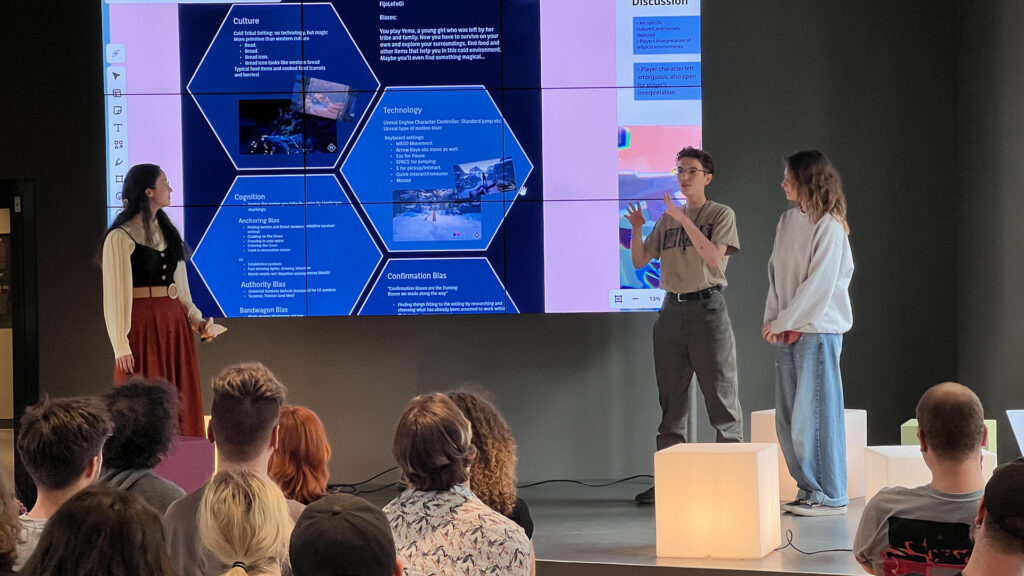
The jam’s core mission was to reflect upon and verify workshop results concerning biases embedded in game rules and algorithms. This timely theme challenged participants to examine how games can perpetuate or challenge societal prejudices through their design choices.
Diverse Game Concepts Emerge
The created prototypes reveals an impressive diversity of approaches:
Social Commentary Games: Several projects tackled representation and identity, including games exploring gender roles and cultural perspectives.
Algorithm Awareness: Multiple teams created games that make algorithmic bias visible, transforming abstract concepts into interactive experiences.
Narrative Experiments: Story-driven prototypes examined how player choices and game narratives can reinforce or subvert social expectations.
System Critiques: Games that deconstruct traditional gaming mechanics to reveal hidden assumptions about competition, success, and player behavior.
Hybrid Innovation
The simultaneous Berlin-Istanbul format demonstrated that meaningful collaboration transcends physical boundaries. Teams worked synchronously across time zones, sharing ideas and building upon each other’s concepts in real-time.
This inaugural jam established a strong foundation for future European Game Science Lab initiatives, proving that games can serve as powerful tools for examining and addressing societal challenges. The diverse portfolio of prototypes shows how game design can become a lens for understanding and potentially transforming social dynamics.
The success metrics speak for themselves: 100+ engaged participants, dozens of innovative prototypes, and a new model for international academic collaboration in game research.
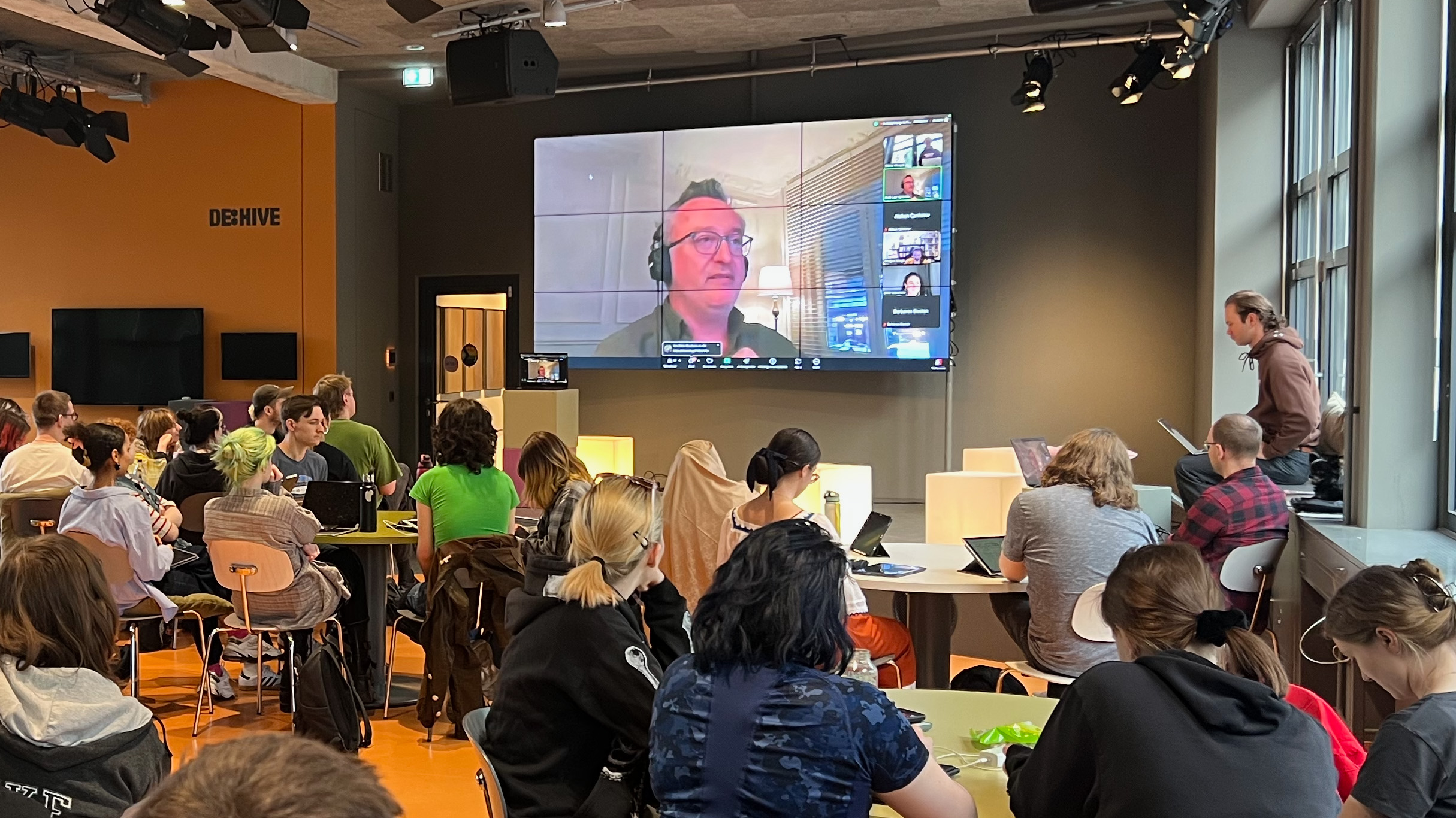
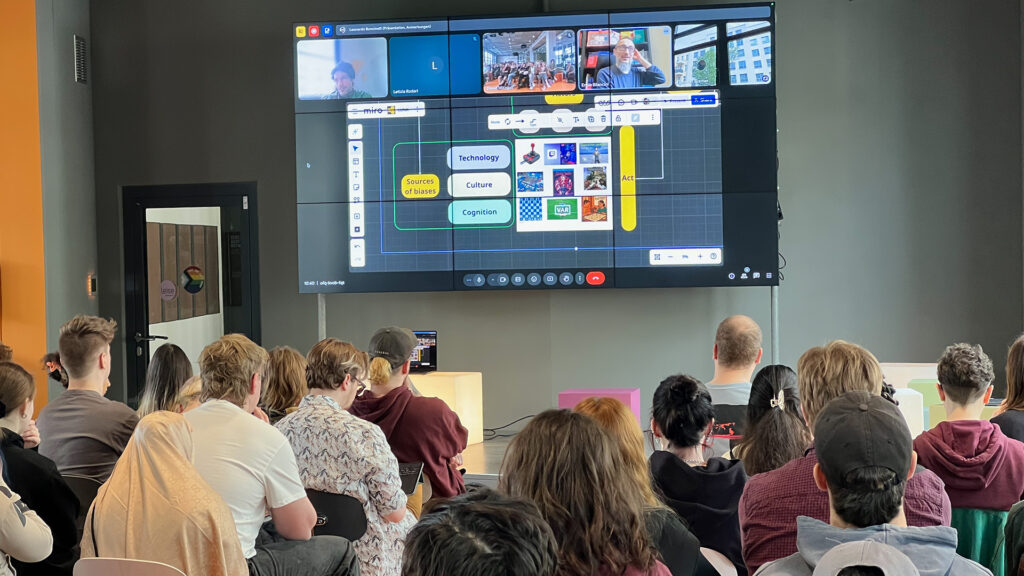
On 23 April 2025, DE:HIVE hosted the conclusion of the workshop series on ‘Identifying Prejudices in Game Rules and Algorithms’ launched at PLAY 2025 in Bologna in a hybrid format. The innovative, two-part workshop, organised by HTW Berlin (HTWB), brought together researchers and students to open a discourse on bias in games and generative AI.
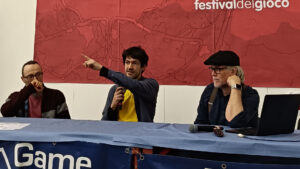
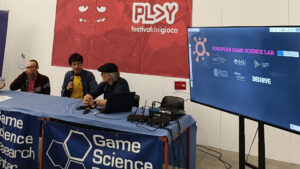
The workshop series began during the PLAY – Festival del Gioco in Bologna from 4 to 6 April and concluded on 23 April at DE:HIVE in Berlin as a hybrid event. The partners from UniFi, IMT Lucca and HTW Berlin created a rich, multicultural dialogue on identifying bias in game systems.
Surrounded by hundreds of games and passionate players, our academic discussions gained a tangible, real-world context that cannot be replicated in a traditional conference room.
The Italian part focused on presenting theoretical frameworks and exchanging methods from different academic traditions.
Three weeks later, on 23 April, the workshop took place at DE:HIVE at HTW Berlin, where students also participated in the discourse. The results of the workshop will also be incorporated into the Game Jam taking place next weekend.
This discussion explored how algorithmic systems often reinforce existing social prejudices, but also offer unique opportunities to correct them.
Another discussion addressed culturally influenced prejudices. What seemed neutral to developers from one cultural context often had great significance in another.
The workshop series shows how international academic collaboration can address real-world challenges while educating the next generation of conscious creatives. By combining the cultural richness of the gaming festival in Bologna with the innovation ecosystem of DE:HIVE in Berlin, the project offered participants a unique learning experience that neither city could have provided on its own.
The success of this workshop series underscores the importance of international collaboration in addressing global challenges in digital culture. Given the continued growth and influence of the gaming industry on society, such joint efforts will become increasingly important to ensure that our digital experiences reflect our shared values.
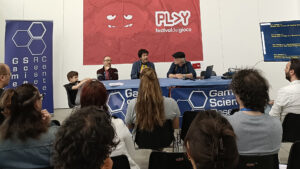
We had a great time at PLAY 2025 in Bologna. The presentation of the European Game Science Lab at PLAY2025 in Bologna was very well received.
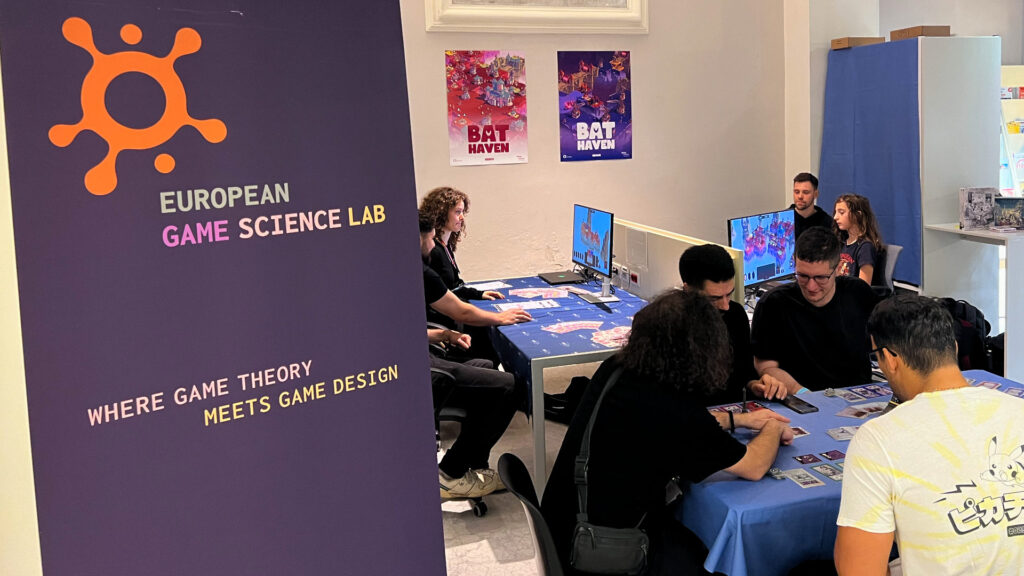
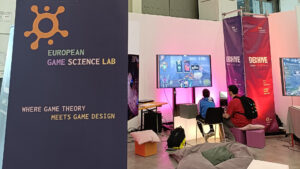
From April 4 to 6, 2025, the European Game Science Lab (EGSL) participated in the renowned “PLAY – Festival del gioco” in Bologna with a joint booth. The three partner institutions – DE:HIVE at HTW Berlin, the Game Science Center at IMT Lucca, and the Game Innovation Center (GIC) at the University of Florence – took advantage of this unique opportunity to present the innovative EGSL project to a wide audience.
The PLAY Festival provided an ideal platform for direct contact with game designers, developers, and representatives of the gaming community. Participation enabled the EGSL team to attract potential contributors to the project and establish valuable connections. The concept of the European Game Science Lab met with great interest and positive feedback among the thousands of festival participants.
The joint presence of the three partner institutions on site was considered particularly valuable. In addition to the public presentation of the project, important internal coordination and planning for upcoming activities could be carried out. A special focus was placed on the preparation of the workshop “Identifying biases in game rules and algorithms” (Activity 3.5), which benefits from the interdisciplinary expertise of all partners.
Participation in PLAY2025 had a positive impact on all ongoing project activities. Discussions with experts and the attention of the festival community led to important impulses and new perspectives for all areas of work at the EGSL.
The successful participation in PLAY 2025 confirms the relevance and potential of the European Game Science Lab as an important initiative for scientific research into games and gaming technologies. The further development of the project and the implementation of the findings in research work are eagerly awaited.
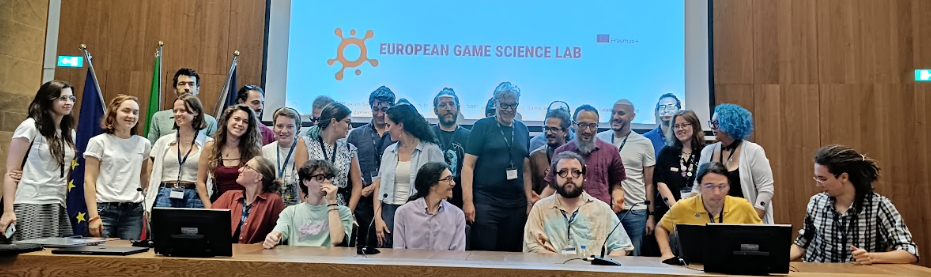
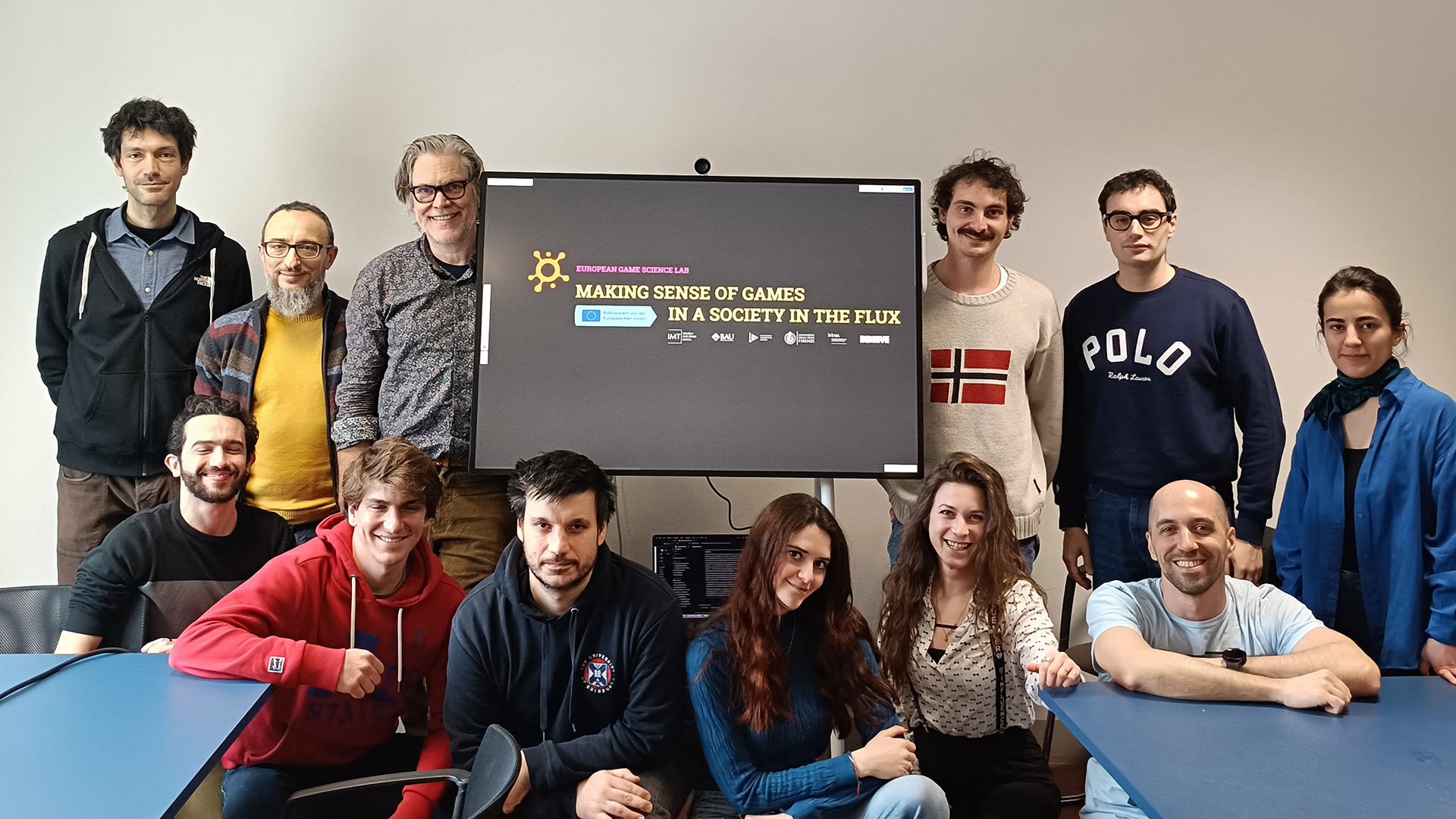
The first joint international workshop of the European Game Science Lab project, organised by IMT Lucca, focused on the concept of creating games in an evolving society. Game Science: Discussion about a new discipline The discussion centred on ‘game science’ as a relatively new field of research and its place in the scientific spectrum.
Participants discussed how game science differs from existing approaches. Not just game theory: It goes beyond the mathematical modelling of strategic interactions. Not just game design: More than just a design perspective. Not just game studies: Expanded to include quantitative methods and consider cultural, anthropological and social factors.
Game science takes a broader, multidisciplinary approach. The basic idea is that games and gaming could become an important common language of the coming century. Understanding this development requires a discipline combining quantitative and qualitative methods of analysis — an area underrepresented in game studies to date. Another topic of discussion was the project’s planned theoretical framework. The aim is to develop an integrative understanding of game design that is independent of the respective aggregate states of games, such as children’s games, board games, digital games and role-playing games.
Practical focus: Game design teaching The three-year project will focus on the further development of game design teaching and the concept of ‘game literacy’ as a practical skill for various educational areas.
The methodological core of the project was discussed: the breakdown of existing game design practices and teaching methods into individual building blocks. These cover various aspects, from game mechanics and themes to other components of game design. The aim is to develop new game design teaching methods based on these building blocks.
The workshop marked the beginning of the project, which aims to advance game design education through a multidisciplinary approach combining game theory and game design with analogue and digital teaching methods.