
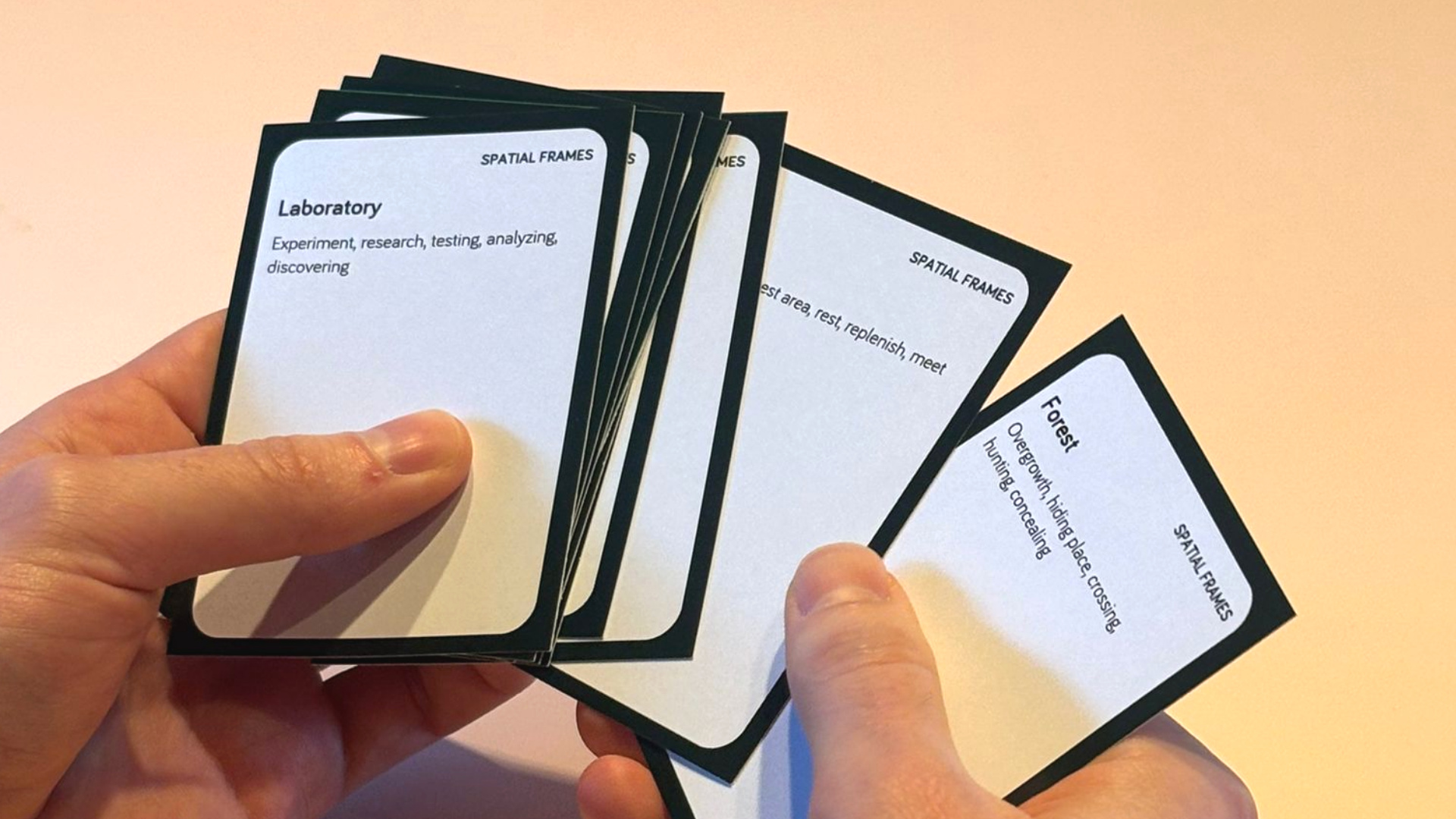
or a focused playtesting and ideation session, we met with Simone Kühn from the Max Planck Institute for Human Development to explore how the LUNA Framework can support the development of meaningful game concepts. The shared goal of the session was clear: to design a game concept that motivates younger people to spend more time outdoors and reconnect with nature.
The ideation process began with the Frame cards, which served as a common starting point for discussion and exploration. From there, the session quickly opened up into a rich landscape of ideas. Participants experimented with different approaches, testing how playful structures could encourage real-world behavior beyond the screen.
Among the concepts explored was a game idea that invites players to collect litter in natural environments, scan their findings, and receive AI-generated “trash monsters” in return — echoing familiar collection mechanics while reframing environmental action as playful discovery. Another concept envisioned an escape-room-like experience in nature, where players must explore and navigate real locations to solve challenges and progress through the game.
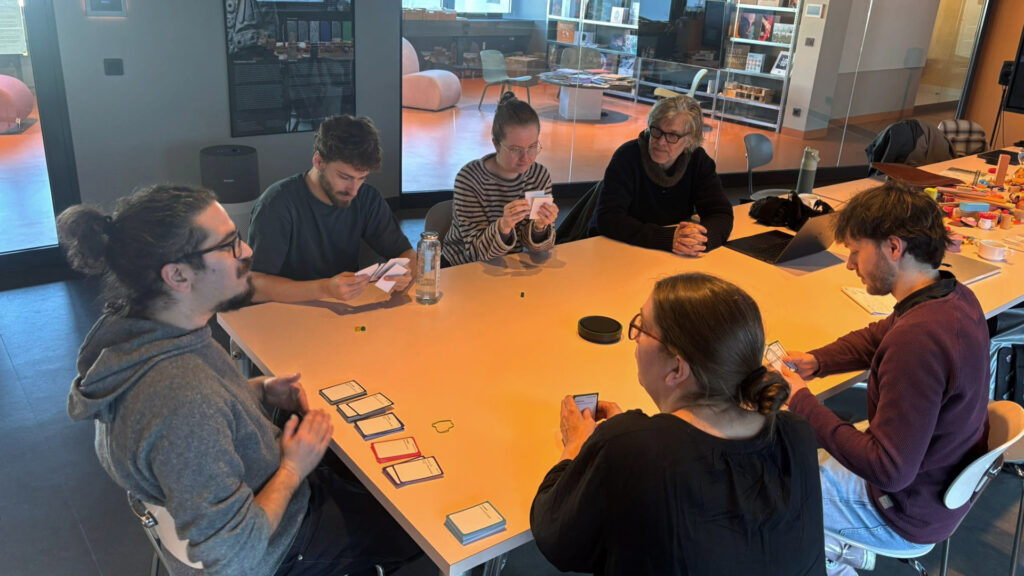
The ideation ultimately converged on a particularly engaging concept: a hybrid of Werewolf and geocaching. In this setup, participants follow a shared route through natural spaces while simultaneously deducing which player among them is the imposter. The combination of physical movement, social interaction, and deduction created a compelling framework for outdoor play.
Overall, the session demonstrated how the LUNA Framework can generate a wide range of promising design directions within a short time. Rather than producing a single finished concept, the ideation phase surfaced multiple strong approaches — each offering potential for deeper exploration and further development beyond the workshop setting.